
REPRESENTATION FOR FEDERAL OFFENSES IN FT. LAUDERDALE AND BROWARD COUNTY
Being charged with a federal crime is serious. Agents thoroughly investigate alleged offenses, and a U.S. Attorney will be aggressive in their fight to prove guilt beyond a reasonable doubt. If you’re convicted, the course of your life can be substantially altered. A federal judge could sentence you to years in prison, and some crimes have lengthy minimum terms of incarceration. Additionally, you may be ordered to pay a hefty fine, which could range from hundreds of thousands to millions of dollars. One of the most effective ways to fight your federal charge is with the help of a Fort Lauderdale federal attorney who has an in-depth understanding of the legal system.
At Hager & Schwartz, P.A., our Fort Lauderdale federal defense lawyers have nearly 50 years of combined experience and have represented clients accused of federal crimes. We understand what’s at stake, and we use our knowledge, skills, and resources to seek the best possible outcomes. Additionally, we are former prosecutors, which means we have experience building cases on behalf of the government. Understanding how the other side thinks and prepares, we can develop a defense that anticipates and is built to counter the prosecution’s arguments. When you turn to us, you can be confident that you will have a competent advocate standing beside you, ready to protect your rights and freedoms.

Call (954) 840-8713 for a free, confidential consultation.
If you’ve been charged with a federal crime in Broward County, schedule an immediate consultation with our Fort Lauderdale federal defense lawyers to discuss your case. We can be reached at (954) 840-8713 or online.
WHAT MAKES A CRIME A FEDERAL OFFENSE?
In the U.S., there are state laws, and there are federal ones. State laws are those created by state legislatures, enforced by local law enforcement agencies, and prosecuted by district attorneys. Federal laws are developed by congress, enforced by federal agencies (such as the FBI or DEA), and prosecuted by U.S. Attorneys.
One of the main differences between state and federal crimes is where the offense occurs. A state crime is one that happens within the state’s borders.
In contrast, a federal crime occurs when:
- The offense happens on federal land or property, such as a national park;
- The conduct crosses state lines, such as an internet crime that affects people in several states;
- The defendant crosses state lines, such as their transporting drugs from Florida to Georgia; or
- The conduct violates immigration laws.
In some cases, an offense can be pursued as both a state and a federal crime.
WHAT ARE COMMON TYPES OF FEDERAL CRIMES IN FLORIDA?
Title 18 of the United States Code enumerates several types of conduct that violate federal laws. Federal crimes are those that violate U.S. government laws, are committed across state or country borders, or are committed on federal property. Some are carried out more often than others.
Common federal crimes include:
- Immigration offenses
- Drug crimes
- Weapons offenses
- Economic crimes
- Tax crimes, such as willfully providing false statements on returns to evade tax obligations
FEDERAL IMMIGRATION OFFENSES
According to the United States Sentencing Commission, in 2018, just over 34% of federal crimes involved some type of immigration offense. These included crimes committed by both U.S. citizens and non-U.S. citizens. Some of the more commonly committed immigration offenses included improper entry into the U.S., unlawful presence in the U.S., and alien smuggling. The penalties varied depending on the specifics on the case, but on average, those convicted were sentenced to just over 1-year imprisonment.
FEDERAL DRUG OFFENSES
In 2018, the second most committed federal crimes were those involving controlled substances. Many crimes included manufacture, sale, or transportation of drugs, while a smaller portion concerned drug possession. Methamphetamine, heroin, and marijuana accounted for most of the cases (65%). Many of the people convicted of a drug offense were subject to mandatory minimum sentences, with the average length of imprisonment ranging from 29 months (for marijuana trafficking offenses) to 95 months (for methamphetamine-related crimes).
FEDERAL FIREARM OFFENSES
In 2018, nearly 11% of federal crimes involved firearms. Many involved illegally possessing a firearm or ammunition, unlawfully transporting explosives, carrying a firearm in a prohibited area (such as a federal building, school, or airplane), using a firearm or explosive while committing a felony, and using a firearm or ammunition during a crime. A majority of firearm offenses, just under 70%, were committed by a felon prohibited from having a gun. In many cases, the person convicted of a firearm offense was subject to a mandatory minimum penalty. For instance, of those found guilty of a drug trafficking crime involving the use of a firearm, 62% were sentenced to a mandatory 5-year prison sentence. Other offenders received a 7-year mandatory minimum (21.8%) or a 10-year or more mandatory minimum (almost 16%).
FEDERAL ECONOMIC CRIMES
According to the United States Sentencing Commission, 9.5% of federal offenses committed during 2018 were economic crimes. These include offenses that fall under the umbrella terms “fraud,” “theft,” or “embezzlement.” Such crimes include property destruction, insider trading, burglary, robbery, extortion, bribery, counterfeiting, and copyright. As with other federal offenses, the conviction penalties for these crimes are severe. For instance, taking property belonging to the U.S. can result in a 15-year prison sentence. The penalties for copyright infringement can include imprisonment for up to 5 years and a fine of up to $250,000.
At Hager & Schwartz, P.A., our aggressive Fort Lauderdale federal attorneys have defended individuals throughout Broward County, FL who were facing serious charges. No matter how complex you feel your case is, we can deliver the legal representation you need.
WHAT ARE THE PUNISHMENTS FOR A FEDERAL CONVICTION IN FORT LAUDERDALE?
When someone is found guilty of a federal offense, the sentencing judge can impose harsh penalties. The term of imprisonment and the amount of the fine depend on the nature of the crime.
Below are a few examples of federal crimes and their associated penalties:
- Child pornography: Any person who produces, transports, or possesses images depicting a minor engaged in sexually explicit conduct or who entices a child to participate in such activity may be charged with this offense. A conviction may result in:
- Between 15 and 30 years in prison
Trafficking 1,000 kilograms or more of marijuana is punishable by:
- Between 10 years and life in prison
- Up to $10,000 in fines
Trafficking 100 kilograms or more of marijuana is punishable by:
- Between 5 and 40 years in prison
- Up to $5,000,000 in fines
Trafficking less than 50 kilograms of marijuana is punishable by:
- Up to 5 years in prison
- Up to $250,000 in fines
- Health care fraud: This offense occurs when either a beneficiary or a practitioner engages in a scheme to defraud a health care benefit program to receive funds they’re not entitled to. A conviction is penalized by:
- Up to 10 years in prison
- Up to 20 years in prison if anyone was injured as a result of the offense
- Up to 30 years in prison
- Up to 20 years in prison
- Up to 20 years in prison
- Up to $500,000 in fines
- Up to 5 years in prison
- Up to $500,000 in fines
MANDATORY MINIMUM SENTENCES UNDER FEDERAL LAW
A sentencing judge is required to impose mandatory minimum terms of imprisonment following convictions for several federal crimes. Hundreds of federal statutes enumerate mandatory sentences.
Some of the most commonly prosecuted include the following:
DRUG CRIMES IN FORT LAUDERDALE, FL
The mandatory minimum sentences for drug crimes depend on the type and amount of drug involved. For instance:
- A 10-year mandatory minimum is imposed for trafficking:
- 1 kilogram or more of heroin,
- 5 kilograms or more of powder cocaine,
- 280 grams or more of crack cocaine,
- 1,000 kilograms or more of marijuana,
- 50 grams or more of methamphetamine.
If the offender had a previous drug crime conviction, the mandatory minimum is 20 years.
If they had two or more previous felony drug crime convictions, the mandatory minimum is life.
- A 5-year mandatory minimum is imposed for trafficking:
- 100 grams or more of heroin,
- 500 grams or more of powder cocaine,
- 28 grams or more of crack cocaine,
- 100 kilograms or more of marijuana, or
- 5 grams or more of methamphetamine.
If the offender had a previous felony drug crime conviction, the mandatory minimum is 10 years.
- A 20-year mandatory minimum is imposed for continuing a criminal enterprise involving controlled substances.
FT. LAUDERDALE FIREARMS CRIMES
- A 5-year mandatory minimum is imposed for possessing or carrying a firearm during a violent or drug crime.
- A 7-year mandatory minimum is imposed for brandishing a firearm during a violent or drug crime.
- A 10-year mandatory minimum is imposed for discharging a firearm during a violent or drug crime, or if the weapon was a short-barreled rifle, a short-barreled shotgun, or a semiautomatic assault weapon.
- A 30-year mandatory minimum is imposed if a machinegun, destructive device, or firearm equipped with a silencer or muffler was used during a violent or drug crime.
- A 15-year mandatory minimum is imposed if a prohibited person possessed a firearm or ammunition and they have three previous violent felony or serious drug crime convictions.
FEDERAL SEX CRIMES IN FORT LAUDERDALE, FL
- A 10-year mandatory minimum is imposed for:
- Sex trafficking a minor between 14 and 17 years of age.
- Using the mail or interstate or foreign communication to coerce or entice a minor to engage in sexual conduct.
- Transporting a child across state lines or country borders to engage in sexual conduct.
- Sex trafficking a minor under 14 years of age.
- Producing child pornography.
- Crossing state lines to have sex with a minor under 12 years of age.
- Crossing state lines and having sex with a minor between 12 and 16 years of age and specified factors are present.
- Buying or selling minors to produce child pornography.
CHILD PORNOGRAPHY CRIMES
- 5-year mandatory minimum is imposed for receiving, distributing, or producing child pornography.
- 10-year mandatory minimum is imposed for possessing child pornography when the offender has a previous sex crime conviction.
IDENTITY THEFT CRIMES
2-year mandatory minimum is imposed for possessing, using, or transferring another person’s identifying information to further a specified felony.
OBTAIN LEGAL HELP AS SOON AS POSSIBLE
At Hager & Schwartz, P.A., we recognize that a federal charge and conviction can have long-term impacts on you and your family. That is why we will provide the defense you need throughout your case. We will look out for your best interests as we seek a favorable result on your behalf. Contact our experienced Fort Lauderdale federal defense attorneys to schedule your free consultation.
Call us at (954) 840-8713 or submit an online contact form today. Your initial consultation is free with our Fort Lauderdale federal defense lawyers.
Contact Us Today
Tell us how we can reach you. Our team is available 24/7.
"*" indicates required fields
If you’ve been charged with a federal crime in Broward County, schedule an immediate consultation with our Fort Lauderdale federal defense lawyers to discuss your case. We can be reached at (954) 840-8713 or online.
In the U.S., there are state laws, and there are federal ones. State laws are those created by state legislatures, enforced by local law enforcement agencies, and prosecuted by district attorneys. Federal laws are developed by congress, enforced by federal agencies (such as the FBI or DEA), and prosecuted by U.S. Attorneys.
One of the main differences between state and federal crimes is where the offense occurs. A state crime is one that happens within the state’s borders.
In contrast, a federal crime occurs when:
- The offense happens on federal land or property, such as a national park;
- The conduct crosses state lines, such as an internet crime that affects people in several states;
- The defendant crosses state lines, such as their transporting drugs from Florida to Georgia; or
- The conduct violates immigration laws.
In some cases, an offense can be pursued as both a state and a federal crime.
Title 18 of the United States Code enumerates several types of conduct that violate federal laws. Federal crimes are those that violate U.S. government laws, are committed across state or country borders, or are committed on federal property. Some are carried out more often than others.
Common federal crimes include:
- Immigration offenses
- Drug crimes
- Weapons offenses
- Economic crimes
- Tax crimes, such as willfully providing false statements on returns to evade tax obligations
According to the United States Sentencing Commission, in 2018, just over 34% of federal crimes involved some type of immigration offense. These included crimes committed by both U.S. citizens and non-U.S. citizens. Some of the more commonly committed immigration offenses included improper entry into the U.S., unlawful presence in the U.S., and alien smuggling. The penalties varied depending on the specifics on the case, but on average, those convicted were sentenced to just over 1-year imprisonment.
In 2018, the second most committed federal crimes were those involving controlled substances. Many crimes included manufacture, sale, or transportation of drugs, while a smaller portion concerned drug possession. Methamphetamine, heroin, and marijuana accounted for most of the cases (65%). Many of the people convicted of a drug offense were subject to mandatory minimum sentences, with the average length of imprisonment ranging from 29 months (for marijuana trafficking offenses) to 95 months (for methamphetamine-related crimes).
In 2018, nearly 11% of federal crimes involved firearms. Many involved illegally possessing a firearm or ammunition, unlawfully transporting explosives, carrying a firearm in a prohibited area (such as a federal building, school, or airplane), using a firearm or explosive while committing a felony, and using a firearm or ammunition during a crime. A majority of firearm offenses, just under 70%, were committed by a felon prohibited from having a gun. In many cases, the person convicted of a firearm offense was subject to a mandatory minimum penalty. For instance, of those found guilty of a drug trafficking crime involving the use of a firearm, 62% were sentenced to a mandatory 5-year prison sentence. Other offenders received a 7-year mandatory minimum (21.8%) or a 10-year or more mandatory minimum (almost 16%).
According to the United States Sentencing Commission, 9.5% of federal offenses committed during 2018 were economic crimes. These include offenses that fall under the umbrella terms “fraud,” “theft,” or “embezzlement.” Such crimes include property destruction, insider trading, burglary, robbery, extortion, bribery, counterfeiting, and copyright. As with other federal offenses, the conviction penalties for these crimes are severe. For instance, taking property belonging to the U.S. can result in a 15-year prison sentence. The penalties for copyright infringement can include imprisonment for up to 5 years and a fine of up to $250,000.
At Hager & Schwartz, P.A., our aggressive Fort Lauderdale federal attorneys have defended individuals throughout Broward County, FL who were facing serious charges. No matter how complex you feel your case is, we can deliver the legal representation you need.
When someone is found guilty of a federal offense, the sentencing judge can impose harsh penalties. The term of imprisonment and the amount of the fine depend on the nature of the crime.
Below are a few examples of federal crimes and their associated penalties:
- Child pornography: Any person who produces, transports, or possesses images depicting a minor engaged in sexually explicit conduct or who entices a child to participate in such activity may be charged with this offense. A conviction may result in:
- Between 15 and 30 years in prison
Trafficking 1,000 kilograms or more of marijuana is punishable by:
- Between 10 years and life in prison
- Up to $10,000 in fines
Trafficking 100 kilograms or more of marijuana is punishable by:
- Between 5 and 40 years in prison
- Up to $5,000,000 in fines
Trafficking less than 50 kilograms of marijuana is punishable by:
- Up to 5 years in prison
- Up to $250,000 in fines
- Health care fraud: This offense occurs when either a beneficiary or a practitioner engages in a scheme to defraud a health care benefit program to receive funds they’re not entitled to. A conviction is penalized by:
- Up to 10 years in prison
- Up to 20 years in prison if anyone was injured as a result of the offense
- Up to 30 years in prison
- Up to 20 years in prison
- Up to 20 years in prison
- Up to $500,000 in fines
- Up to 5 years in prison
- Up to $500,000 in fines
MANDATORY MINIMUM SENTENCES UNDER FEDERAL LAWA sentencing judge is required to impose mandatory minimum terms of imprisonment following convictions for several federal crimes. Hundreds of federal statutes enumerate mandatory sentences.
Some of the most commonly prosecuted include the following:
DRUG CRIMES IN FORT LAUDERDALE, FLThe mandatory minimum sentences for drug crimes depend on the type and amount of drug involved. For instance:
- A 10-year mandatory minimum is imposed for trafficking:
- 1 kilogram or more of heroin,
- 5 kilograms or more of powder cocaine,
- 280 grams or more of crack cocaine,
- 1,000 kilograms or more of marijuana,
- 50 grams or more of methamphetamine.
If the offender had a previous drug crime conviction, the mandatory minimum is 20 years.
If they had two or more previous felony drug crime convictions, the mandatory minimum is life.
- A 5-year mandatory minimum is imposed for trafficking:
- 100 grams or more of heroin,
- 500 grams or more of powder cocaine,
- 28 grams or more of crack cocaine,
- 100 kilograms or more of marijuana, or
- 5 grams or more of methamphetamine.
If the offender had a previous felony drug crime conviction, the mandatory minimum is 10 years.
- A 20-year mandatory minimum is imposed for continuing a criminal enterprise involving controlled substances.
FT. LAUDERDALE FIREARMS CRIMES- A 5-year mandatory minimum is imposed for possessing or carrying a firearm during a violent or drug crime.
- A 7-year mandatory minimum is imposed for brandishing a firearm during a violent or drug crime.
- A 10-year mandatory minimum is imposed for discharging a firearm during a violent or drug crime, or if the weapon was a short-barreled rifle, a short-barreled shotgun, or a semiautomatic assault weapon.
- A 30-year mandatory minimum is imposed if a machinegun, destructive device, or firearm equipped with a silencer or muffler was used during a violent or drug crime.
- A 15-year mandatory minimum is imposed if a prohibited person possessed a firearm or ammunition and they have three previous violent felony or serious drug crime convictions.
FEDERAL SEX CRIMES IN FORT LAUDERDALE, FL- A 10-year mandatory minimum is imposed for:
- Sex trafficking a minor between 14 and 17 years of age.
- Using the mail or interstate or foreign communication to coerce or entice a minor to engage in sexual conduct.
- Transporting a child across state lines or country borders to engage in sexual conduct.
- Sex trafficking a minor under 14 years of age.
- Producing child pornography.
- Crossing state lines to have sex with a minor under 12 years of age.
- Crossing state lines and having sex with a minor between 12 and 16 years of age and specified factors are present.
- Buying or selling minors to produce child pornography.
CHILD PORNOGRAPHY CRIMES- 5-year mandatory minimum is imposed for receiving, distributing, or producing child pornography.
- 10-year mandatory minimum is imposed for possessing child pornography when the offender has a previous sex crime conviction.
IDENTITY THEFT CRIMES2-year mandatory minimum is imposed for possessing, using, or transferring another person’s identifying information to further a specified felony.
OBTAIN LEGAL HELP AS SOON AS POSSIBLEAt Hager & Schwartz, P.A., we recognize that a federal charge and conviction can have long-term impacts on you and your family. That is why we will provide the defense you need throughout your case. We will look out for your best interests as we seek a favorable result on your behalf. Contact our experienced Fort Lauderdale federal defense attorneys to schedule your free consultation.
Call us at (954) 840-8713 or submit an online contact form today. Your initial consultation is free with our Fort Lauderdale federal defense lawyers.
Contact Us Today
HOW OUR ATTORNEYS PREPARE YOUR CASE
We preserve surveillance footage, photographs, dispatch recordings, body-camera video, medical records, phone data, and witness communications before they disappear. We investigate the scene, test the State’s timeline, and identify whether self-defense, accident, credibility problems, or unlawful police conduct changes the case.

TRUSTED WHEN THE STAKES ARE HIGH

They answered every question, kept me informed, and gave me confidence at every stage. The case was dismissed.

Former client
Brett was attentive, direct, and prepared. His strategy went above and beyond, and I could not be more pleased with the result.
Google review
The team treated my family with respect and acted quickly. We always knew what was happening next.
Miami client
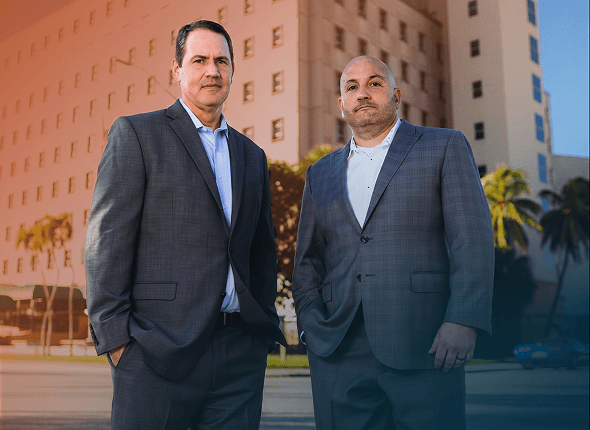
THE TEAM WHO WILL FIGHT FOR YOU
Brett M. Schwartz and John S. Hager bring more than 50 years of combined experience to state and federal criminal cases. You work directly with an attorney who knows your file and is prepared to answer when the situation changes."*" indicates required fields
