
Ft. Lauderdale and Broward County VOP Defense
When you are put on probation, you are agreeing to adhere to a legally binding set of standards of conduct until the probationary period is over. If you fail to follow the regulations set out for you and are accused of violating your probation, you could face serious jail time. This possibility could be very worrisome for any individual who is thought to have violated their probation, as the time spent incarcerated can even be increased above the original length of the sentence.
If you have been accused of violating your probation, having an experienced attorney can make a huge difference. At Hager & Schwartz, P.A., our Fort Lauderdale legal team consists of former prosecutors with decades of legal experience who understand the complexities of the criminal justice system. We can review your case, represent you at your probation hearing, and present supporting evidence that can reduce the penalties you face.

Call (954) 840-8713 for a free, confidential consultation.
Accused of violating probation in Broward County? Don’t wait—every moment matters. Contact our Fort Lauderdale probation violation lawyers for a free consultation.
Types of Probation Violations in Fort Lauderdale, FL
When you are placed on probation in Florida, the court expects strict adherence to the conditions set forth. Any intentional or accidental deviation can lead to a violation of probation (VOP). Under Florida law, these violations are categorized as either technical or substantive. Recognizing the difference is essential because the potential consequences vary significantly.
Technical Violations
A technical violation happens when someone breaches the rules of probation without committing a new crime. While these might seem like minor mistakes, the truth is that even the smallest violation can threaten your freedom.
Examples of technical violations include:
- Failing to report to your probation officer as scheduled
- Missing a required court-ordered class or counseling session
- Failing to complete community service hours
- Not paying fines, court costs, or restitution on time
- Violating a no-contact or protective order
- Missing curfew
- Failing a drug or alcohol test
- Traveling outside Broward County without prior permission
Judges in Broward County take these violations seriously, and probation officers must report them. Thus, missing an appointment or making a poor decision about travel can quickly lead to an arrest warrant. That’s why working with an experienced VOP lawyer in Broward County is crucial to explain the situation and protect your rights.
Substantive Violations
A substantive violation is much more serious. This occurs when a person on probation is accused of committing a new criminal offense while still serving their probation term.
Substantive violations can include:
- Being arrested for DUI
- Committing theft or shoplifting
- Facing charges for assault or battery
Unlike technical violations, which may sometimes be excused or corrected, substantive violations are prosecuted aggressively in the Broward County Circuit Court. The court considers these cases a sign that probation has failed, and prosecutors often seek harsher penalties, including probation revocation and jail or prison time.
The Legal Process for Probation Violations in FL
When a probation violation is alleged, the legal process in Broward County moves quickly—and the stakes are high. Knowing how these cases are handled in our local courts can help you prepare for what’s ahead and emphasize why immediate representation is so crucial.
Probation Officer’s Affidavit
The process usually starts when a probation officer files an affidavit of violation. The affidavit details why you are accused of breaching your probation conditions. It could be missing a scheduled appointment, failing a drug test, or leaving Broward County without permission. Even a single technical mistake can be enough for the probation officer to proceed with this filing.
Arrest Warrants
Once the affidavit is submitted, it goes before a judge. If the judge finds enough grounds, they can issue an arrest warrant almost immediately. The warrant is often issued without bond, meaning you could be taken into custody and held until your hearing date. This is why quick action by a defense attorney can make a vital difference in protecting your freedom.
Probation Violation Hearing in Circuit Court
Probation violation hearings in Broward County are held in the Circuit Court Criminal Division. During this hearing, the judge—not a jury—determines the outcome of your case. Both sides present evidence, and you have the chance to explain the circumstances behind the alleged violation. For example, if you missed a check-in due to a medical emergency, your attorney can provide proof to demonstrate that the violation was not intentional.
Standard of Proof
It’s important to understand that the legal standard at a probation violation hearing is much lower than in a traditional criminal trial. Instead of proving guilt “beyond a reasonable doubt,” the state only needs to demonstrate a violation by a preponderance of the evidence, meaning it’s more likely than not that the violation happened. This standard makes it easier for prosecutors to meet their burden, which is why you need a strong defense strategy to counter their claims.
Because of the speed with which these cases move, delaying action can cost you valuable opportunities to challenge the allegations. Having an experienced Fort Lauderdale probation attorney on your side means you’ll have someone who understands the local court system, the judges who preside over these cases, and effective defenses for violations. At Hager & Schwartz, P.A., we use our experience as former prosecutors to anticipate the state’s arguments and build a proactive defense to protect your rights from the start.
Florida Probation Violation Penalties
When you’re accused of violating probation, the potential penalties can be serious, and the outcome largely depends on the details of your case. Judges in Broward County have broad discretion in deciding consequences, which means two people accused of similar violations might face very different results. Factors like the type of violation, your past criminal record, and how effectively your attorney argues your case all influence what happens next.
A violation of probation in Florida can lead to three primary outcomes:
- Reinstatement: The court permits you to stay on probation under the same conditions, giving you another chance.
- Modification: The judge keeps you on probation but enforces stricter conditions. This could include a curfew, mandatory counseling, or enrollment in a drug or alcohol treatment program.
- Revocation: The most severe consequence occurs when probation is revoked and you are sentenced to jail or prison for the underlying offense. Once probation is revoked in Florida, the court can impose the maximum penalty initially available for the crime. For example, if you are on probation for cocaine possession, a third-degree felony carrying a maximum five-year prison sentence, violating your probation could result in the judge requiring you to serve the full five years, even if the plea agreement specified a three-year sentence.
Because of this range of possibilities, having strong legal representation can determine whether you walk out of court with another opportunity or face incarceration.
Examples of Violations and Outcomes
|
Type of Violation |
Example |
Possible Outcome |
|
Technical |
Missed curfew |
Probation reinstated with a warning |
|
Technical |
Failed drug test |
Probation modified with treatment program |
|
Substantive |
DUI arrest |
Probation revoked, jail or prison sentence |
It’s important to remember that penalties for violating probation are not automatic. Judges have significant discretion, which means choosing the right defense strategy can lead to a much more favorable outcome. At Hager & Schwartz, P.A., our experience as former prosecutors provides insight into how the state enforces violation of probation penalties in Florida. We understand when to advocate for reinstatement, how to negotiate modifications that prevent jail time, and how to challenge the state’s evidence when seeking to revoke probation in Florida.
Is Relief After a Felony Probation Violation Still Possible?
A probation violation doesn’t mean the end of the road. Florida law gives judges some flexibility in deciding how to handle these cases, and with the right approach, opportunities are available to reduce or even avoid the harshest consequences. At Hager & Schwartz, P.A., we explore every possible avenue of relief to protect our clients’ futures.
Early Termination of Probation
In some cases, it may be possible to request an early termination of probation even after a violation has occurred (Florida Statutes § 984.04). Seeking early termination involves filing a motion with the court and attending a hearing where a judge assesses your progress and compliance.
When deciding whether to grant early termination, judges consider factors such as:
- Length of time already served on probation
- Good behavior and a clean record since the violation
- Efforts at rehabilitation, such as completing treatment or counseling programs
- Financial responsibility, including payment of restitution or fines
- Steady employment or enrollment in school
- The overall safety of the community and the interest of justice
Although not guaranteed, early termination is more likely to be approved when the violation was minor and the probationer shows clear signs of responsibility and reform.
Alternative Sentencing Options
Even if early termination isn’t feasible, the court might consider alternative sentencing instead of jail or prison.
These options can include:
- Diversion programs focused on rehabilitation rather than punishment
- Substance abuse or mental health treatment to address underlying issues
- Community service as a way to demonstrate accountability
These alternatives help individuals avoid incarceration and equip them with the tools and support needed to succeed in the future.
Judges are not required to grant early termination or alternatives-they must be convinced that it is fair and safe for the community. Having a skilled attorney present your progress, highlight your good faith efforts, and argue persuasively can make a critical difference. As former prosecutors, our attorneys know how to frame these arguments effectively, giving you a better chance at securing relief.
Ft. Lauderdale Legal Defenses to Probation Violations
Being accused of violating probation can be overwhelming, especially since the burden of proof in these cases is lower than in a traditional trial. But it’s important to remember that an allegation doesn’t necessarily lead to a conviction. Valid probation violation defenses that can be used to challenge the state’s claims and protect your freedom.
The following are a few legal defenses to alleged probation violations:
- You are innocent: If you have a “good reason” for missing your meeting with a probation officer, you may not be punished for violating your probation. Common good reasons include experiencing a medical emergency or a family emergency that requires your immediate attention.
- You acted in good faith: It is not uncommon for individuals on probation to experience difficulties paying fees and fines associated with a criminal conviction. Failure to pay these costs can be viewed as a violation of your probation. Yet, if you can demonstrate that you tried your best to pay in good faith, you may avoid being penalized. Ensure you have the proper evidence to back up your claims.
- The court cannot prove you violated probation: If you are being accused of violating your probation by your probation officer, but they lack the evidence to prove you did so, you need to provide supporting evidence of your own to show the court that you have been following the terms.
- The case involves false or mistaken identity: Not every violation is clear-cut. In some cases, probation officers or law enforcement may file a report based on misinformation or mistaken identity. For example, an alleged failed drug test could be due to testing errors, or accusations of missed appointments may stem from clerical mistakes. A strong defense can uncover these errors and demonstrate that you complied with the terms of your probation.
No two cases are alike, which is why a one-size-fits-all approach doesn’t work. At Hager & Schwartz, P.A., we create custom defense strategies that reflect the specific details of each client’s case. As former prosecutors, we understand how the government tries to prove violations, and we use that knowledge to identify weaknesses in their case, whether it’s challenging the reliability of evidence, pointing out procedural mistakes, or presenting mitigating factors.
By acting quickly and strategically, our attorneys can seek to minimize the consequences of an alleged violation, protect your rights in court, and pursue outcomes that avoid incarceration.
Discuss Your Options Concerning Violating Probation in Fort Lauderdale, FL
If you have been accused of violating the terms of your probation, time is of the essence. For this reason, we encourage you to contact our Fort Lauderdale probation violation lawyers at Hager & Schwartz, P.A. as soon as possible. We are available to discuss your case 24/7, so don’t wait to give us a call. We offer immediate consultations with former prosecutors who share decades of experience.
Facing a VOP hearing in Broward County Circuit Court? Put former prosecutors on your side. Contact us to discuss your options.
FAQs About Probation Violations in Florida
Probation violations can be confusing, and many people share the same urgent questions after being accused of one. Below are answers to some of the most common concerns from individuals facing these situations.
Can I Bond Out After a Probation Violation in Florida?
Unlike new criminal charges, a violation of probation does not automatically allow for bond. In many cases, judges in Broward County issue “no-bond” warrants, meaning you may remain in custody until your hearing. Whether bond is available often depends on the type of violation and your history on probation. A skilled attorney can file a motion requesting a bond hearing and argue for your release while the case is pending.
Do Probation Violations Have a Statute of Limitations?
No. Florida does not have a statute of limitations on probation violations. A judge can issue a warrant for your arrest even if years have passed since the alleged violation. It’s important to understand that a probation violation hearing differs from a new criminal trial. Instead, the judge reviews the allegations and decides—based on the lower “preponderance of the evidence” standard—whether you violated the terms of your probation.
What happens if it’s My First Probation Violation?
Courts often treat a first-time violation differently from repeated offenses. If your violation was minor or technical, the judge might be willing to reinstate your probation under the same conditions or modify it with stricter requirements like curfews, counseling, or treatment. Although revocation is still possible, especially in cases involving new criminal charges, first-time offenders usually have a stronger case for leniency when effectively represented in court.
Contact Us Today
Tell us how we can reach you. Our team is available 24/7.
"*" indicates required fields
Accused of violating probation in Broward County? Don’t wait—every moment matters. Contact our Fort Lauderdale probation violation lawyers for a free consultation.
When you are placed on probation in Florida, the court expects strict adherence to the conditions set forth. Any intentional or accidental deviation can lead to a violation of probation (VOP). Under Florida law, these violations are categorized as either technical or substantive. Recognizing the difference is essential because the potential consequences vary significantly.
A technical violation happens when someone breaches the rules of probation without committing a new crime. While these might seem like minor mistakes, the truth is that even the smallest violation can threaten your freedom.
Examples of technical violations include:
- Failing to report to your probation officer as scheduled
- Missing a required court-ordered class or counseling session
- Failing to complete community service hours
- Not paying fines, court costs, or restitution on time
- Violating a no-contact or protective order
- Missing curfew
- Failing a drug or alcohol test
- Traveling outside Broward County without prior permission
Judges in Broward County take these violations seriously, and probation officers must report them. Thus, missing an appointment or making a poor decision about travel can quickly lead to an arrest warrant. That’s why working with an experienced VOP lawyer in Broward County is crucial to explain the situation and protect your rights.
A substantive violation is much more serious. This occurs when a person on probation is accused of committing a new criminal offense while still serving their probation term.
Substantive violations can include:
- Being arrested for DUI
- Committing theft or shoplifting
- Facing charges for assault or battery
Unlike technical violations, which may sometimes be excused or corrected, substantive violations are prosecuted aggressively in the Broward County Circuit Court. The court considers these cases a sign that probation has failed, and prosecutors often seek harsher penalties, including probation revocation and jail or prison time.
When a probation violation is alleged, the legal process in Broward County moves quickly—and the stakes are high. Knowing how these cases are handled in our local courts can help you prepare for what’s ahead and emphasize why immediate representation is so crucial.
The process usually starts when a probation officer files an affidavit of violation. The affidavit details why you are accused of breaching your probation conditions. It could be missing a scheduled appointment, failing a drug test, or leaving Broward County without permission. Even a single technical mistake can be enough for the probation officer to proceed with this filing.
Once the affidavit is submitted, it goes before a judge. If the judge finds enough grounds, they can issue an arrest warrant almost immediately. The warrant is often issued without bond, meaning you could be taken into custody and held until your hearing date. This is why quick action by a defense attorney can make a vital difference in protecting your freedom.
Probation violation hearings in Broward County are held in the Circuit Court Criminal Division. During this hearing, the judge—not a jury—determines the outcome of your case. Both sides present evidence, and you have the chance to explain the circumstances behind the alleged violation. For example, if you missed a check-in due to a medical emergency, your attorney can provide proof to demonstrate that the violation was not intentional.
It’s important to understand that the legal standard at a probation violation hearing is much lower than in a traditional criminal trial. Instead of proving guilt “beyond a reasonable doubt,” the state only needs to demonstrate a violation by a preponderance of the evidence, meaning it’s more likely than not that the violation happened. This standard makes it easier for prosecutors to meet their burden, which is why you need a strong defense strategy to counter their claims.
Because of the speed with which these cases move, delaying action can cost you valuable opportunities to challenge the allegations. Having an experienced Fort Lauderdale probation attorney on your side means you’ll have someone who understands the local court system, the judges who preside over these cases, and effective defenses for violations. At Hager & Schwartz, P.A., we use our experience as former prosecutors to anticipate the state’s arguments and build a proactive defense to protect your rights from the start.
When you’re accused of violating probation, the potential penalties can be serious, and the outcome largely depends on the details of your case. Judges in Broward County have broad discretion in deciding consequences, which means two people accused of similar violations might face very different results. Factors like the type of violation, your past criminal record, and how effectively your attorney argues your case all influence what happens next.
A violation of probation in Florida can lead to three primary outcomes:
- Reinstatement: The court permits you to stay on probation under the same conditions, giving you another chance.
- Modification: The judge keeps you on probation but enforces stricter conditions. This could include a curfew, mandatory counseling, or enrollment in a drug or alcohol treatment program.
- Revocation: The most severe consequence occurs when probation is revoked and you are sentenced to jail or prison for the underlying offense. Once probation is revoked in Florida, the court can impose the maximum penalty initially available for the crime. For example, if you are on probation for cocaine possession, a third-degree felony carrying a maximum five-year prison sentence, violating your probation could result in the judge requiring you to serve the full five years, even if the plea agreement specified a three-year sentence.
Because of this range of possibilities, having strong legal representation can determine whether you walk out of court with another opportunity or face incarceration.
|
Type of Violation |
Example |
Possible Outcome |
|
Technical |
Missed curfew |
Probation reinstated with a warning |
|
Technical |
Failed drug test |
Probation modified with treatment program |
|
Substantive |
DUI arrest |
Probation revoked, jail or prison sentence |
It’s important to remember that penalties for violating probation are not automatic. Judges have significant discretion, which means choosing the right defense strategy can lead to a much more favorable outcome. At Hager & Schwartz, P.A., our experience as former prosecutors provides insight into how the state enforces violation of probation penalties in Florida. We understand when to advocate for reinstatement, how to negotiate modifications that prevent jail time, and how to challenge the state’s evidence when seeking to revoke probation in Florida.
A probation violation doesn’t mean the end of the road. Florida law gives judges some flexibility in deciding how to handle these cases, and with the right approach, opportunities are available to reduce or even avoid the harshest consequences. At Hager & Schwartz, P.A., we explore every possible avenue of relief to protect our clients’ futures.
In some cases, it may be possible to request an early termination of probation even after a violation has occurred (Florida Statutes § 984.04). Seeking early termination involves filing a motion with the court and attending a hearing where a judge assesses your progress and compliance.
When deciding whether to grant early termination, judges consider factors such as:
- Length of time already served on probation
- Good behavior and a clean record since the violation
- Efforts at rehabilitation, such as completing treatment or counseling programs
- Financial responsibility, including payment of restitution or fines
- Steady employment or enrollment in school
- The overall safety of the community and the interest of justice
Although not guaranteed, early termination is more likely to be approved when the violation was minor and the probationer shows clear signs of responsibility and reform.
Even if early termination isn’t feasible, the court might consider alternative sentencing instead of jail or prison.
These options can include:
- Diversion programs focused on rehabilitation rather than punishment
- Substance abuse or mental health treatment to address underlying issues
- Community service as a way to demonstrate accountability
These alternatives help individuals avoid incarceration and equip them with the tools and support needed to succeed in the future.
Judges are not required to grant early termination or alternatives-they must be convinced that it is fair and safe for the community. Having a skilled attorney present your progress, highlight your good faith efforts, and argue persuasively can make a critical difference. As former prosecutors, our attorneys know how to frame these arguments effectively, giving you a better chance at securing relief.
Being accused of violating probation can be overwhelming, especially since the burden of proof in these cases is lower than in a traditional trial. But it’s important to remember that an allegation doesn’t necessarily lead to a conviction. Valid probation violation defenses that can be used to challenge the state’s claims and protect your freedom.
The following are a few legal defenses to alleged probation violations:
- You are innocent: If you have a “good reason” for missing your meeting with a probation officer, you may not be punished for violating your probation. Common good reasons include experiencing a medical emergency or a family emergency that requires your immediate attention.
- You acted in good faith: It is not uncommon for individuals on probation to experience difficulties paying fees and fines associated with a criminal conviction. Failure to pay these costs can be viewed as a violation of your probation. Yet, if you can demonstrate that you tried your best to pay in good faith, you may avoid being penalized. Ensure you have the proper evidence to back up your claims.
- The court cannot prove you violated probation: If you are being accused of violating your probation by your probation officer, but they lack the evidence to prove you did so, you need to provide supporting evidence of your own to show the court that you have been following the terms.
- The case involves false or mistaken identity: Not every violation is clear-cut. In some cases, probation officers or law enforcement may file a report based on misinformation or mistaken identity. For example, an alleged failed drug test could be due to testing errors, or accusations of missed appointments may stem from clerical mistakes. A strong defense can uncover these errors and demonstrate that you complied with the terms of your probation.
No two cases are alike, which is why a one-size-fits-all approach doesn’t work. At Hager & Schwartz, P.A., we create custom defense strategies that reflect the specific details of each client’s case. As former prosecutors, we understand how the government tries to prove violations, and we use that knowledge to identify weaknesses in their case, whether it’s challenging the reliability of evidence, pointing out procedural mistakes, or presenting mitigating factors.
By acting quickly and strategically, our attorneys can seek to minimize the consequences of an alleged violation, protect your rights in court, and pursue outcomes that avoid incarceration.
If you have been accused of violating the terms of your probation, time is of the essence. For this reason, we encourage you to contact our Fort Lauderdale probation violation lawyers at Hager & Schwartz, P.A. as soon as possible. We are available to discuss your case 24/7, so don’t wait to give us a call. We offer immediate consultations with former prosecutors who share decades of experience.
Facing a VOP hearing in Broward County Circuit Court? Put former prosecutors on your side. Contact us to discuss your options.
Probation violations can be confusing, and many people share the same urgent questions after being accused of one. Below are answers to some of the most common concerns from individuals facing these situations.
Unlike new criminal charges, a violation of probation does not automatically allow for bond. In many cases, judges in Broward County issue “no-bond” warrants, meaning you may remain in custody until your hearing. Whether bond is available often depends on the type of violation and your history on probation. A skilled attorney can file a motion requesting a bond hearing and argue for your release while the case is pending.
No. Florida does not have a statute of limitations on probation violations. A judge can issue a warrant for your arrest even if years have passed since the alleged violation. It’s important to understand that a probation violation hearing differs from a new criminal trial. Instead, the judge reviews the allegations and decides—based on the lower “preponderance of the evidence” standard—whether you violated the terms of your probation.
Courts often treat a first-time violation differently from repeated offenses. If your violation was minor or technical, the judge might be willing to reinstate your probation under the same conditions or modify it with stricter requirements like curfews, counseling, or treatment. Although revocation is still possible, especially in cases involving new criminal charges, first-time offenders usually have a stronger case for leniency when effectively represented in court.
HOW OUR ATTORNEYS PREPARE YOUR CASE
We preserve surveillance footage, photographs, dispatch recordings, body-camera video, medical records, phone data, and witness communications before they disappear. We investigate the scene, test the State’s timeline, and identify whether self-defense, accident, credibility problems, or unlawful police conduct changes the case.

TRUSTED WHEN THE STAKES ARE HIGH

They answered every question, kept me informed, and gave me confidence at every stage. The case was dismissed.

Former client
Brett was attentive, direct, and prepared. His strategy went above and beyond, and I could not be more pleased with the result.
Google review
The team treated my family with respect and acted quickly. We always knew what was happening next.
Miami client
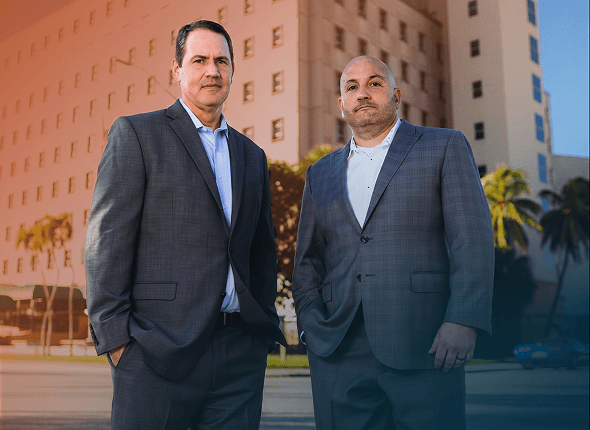
THE TEAM WHO WILL FIGHT FOR YOU
Brett M. Schwartz and John S. Hager bring more than 50 years of combined experience to state and federal criminal cases. You work directly with an attorney who knows your file and is prepared to answer when the situation changes."*" indicates required fields
